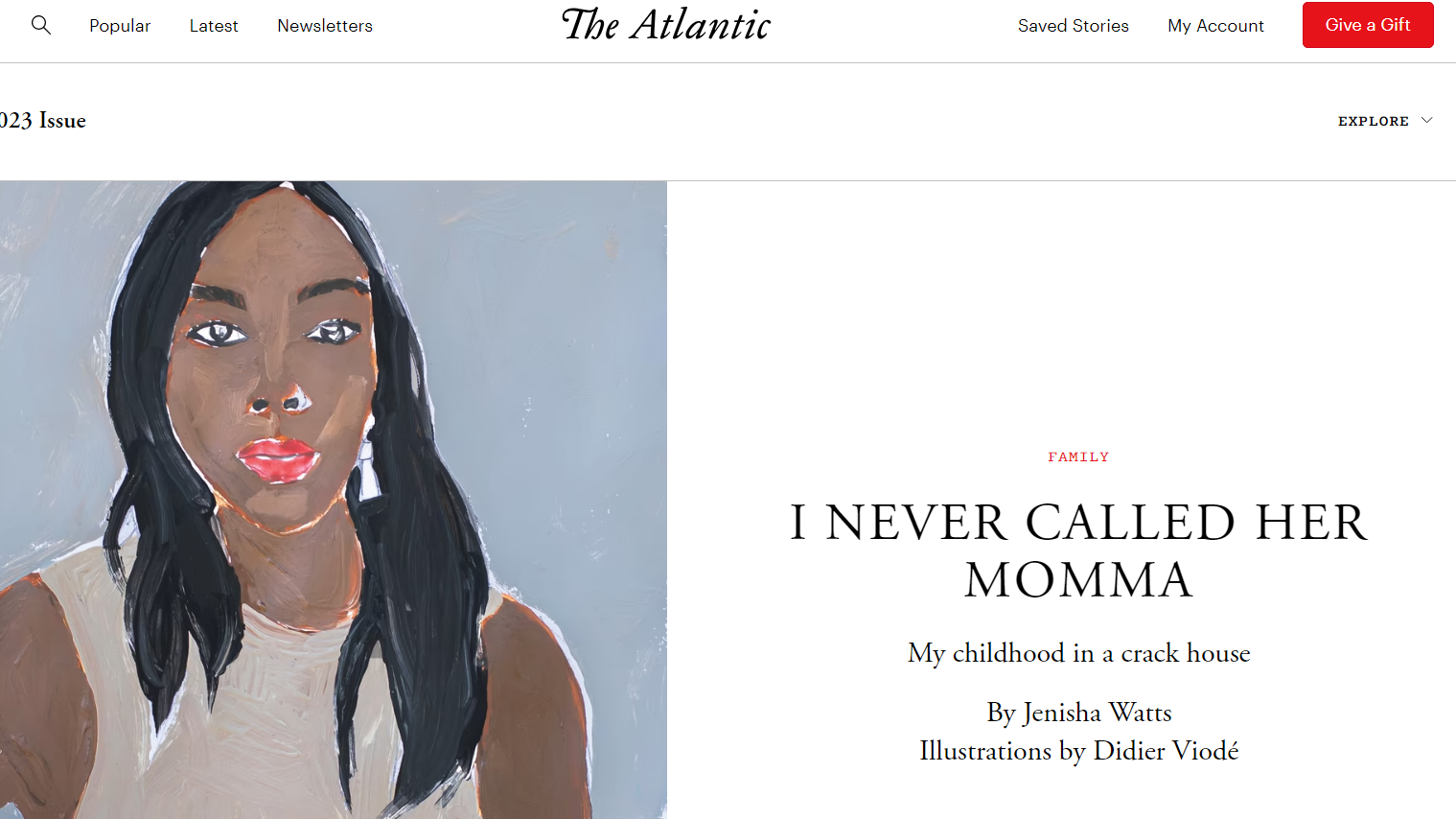
It’s too bad that Jenisha Watts’ brilliant essay is behind a paywall, especially when advertisements for The Atlantic‘s most popular essays meet millions of eyes on a daily basis. This just means that all over the world, non-subscribers will think they know Jenisha’s story based on the title and subtitle. Non-subscribers wouldn’t be able to guess the twists and turns of Jenisha’s essay or feel the impact of its brutal landing. Talented Tenth Negros worldwide might guess that we’ve been set back by decades (at least), and Appalachians still reeling from Hillbilly Elegy will breathe a collective sigh of relief that crack, not opioids, is the drug associated with this particular Kentucky tale.
I don’t believe there is a lover of words and people who could reduce Jenisha’s essay to Kentuckian deviance. Jenisha’s story is an American dream, a Horatio Algier story as inspiring as the biography of the Cosmopolitan editor Jenisha quotes in her own essay.
Helen Gurley Brown grew up in Arkansas. “I never liked the looks of the life that was programmed for me—ordinary, hillbilly, and poor,” she wrote.
Jenisha Watts, from “I Never Called Her Momma”
If I finished Jenisha’s essay feeling inspired rather than ashamed, why is my inner editor such a bitch when it comes to my own Black-ass stories?
I think this bitchiness is born of misunderstanding.
The year was 2010 or 2009 or 2011. I don’t know. My brain helps me suppress the things I don’t want to remember, like the time [redacted Black-ass story] and I almost failed out of graduate school. The first event didn’t cause the latter; my ADHD did. But I was 3 or 4 or 2 years away from the diagnosis that would clear up my hindsight and I was preparing a case for grace. In graduate school they call that Sunday School concept “accommodations.”
As I am still wont to do, I practiced my speech for my friend Whitney. “I haven’t been able to concentrate,” I was going to say to the director of graduate studies, “since [redacted Black-ass story].” Whitney stopped me before I could get the whole story out.
“Uh uh.” Her hand was frozen in a don’t-even stance. “Don’t give them people your Black-ass story.”
The redacted part of this memory is a story familiar to first-generation Blackademics across the country. Something recognizably Black happens to somebody at home and the news finds you in the ivory tower. You have to make a decision about how to spend your spoons. Do you worry about the thing you cannot change from these many miles away or do you focus all your brainpower on synthesizing the claims of five literary scholars who all happened to read the same short story you liked so much more before you were tasked with writing an academic essay about it? I’d chosen the former and now my good good girlfriend was telling me that was a Black-ass choice, understandable but ultimately useless in the court of meritocracy academia pretends to be. After all, Professor Shortman had no frame of reference for my kind of stress; mine would be a story he might sneer at then share among his colleagues as evidence that academic space just wasn’t suitable for a person like me. My honesty might hurt some future graduate student that I hadn’t even imagined when I was trying to explain away symptoms of ADHD with life events.
Whitney had a point, one that has probably been passed around integrated space for generations. Black-ass stories are too precious to be exchanged for the low price of empathy.
I think about Whitney every time I think to pitch an essay about life and loss. Is this one of the stories I shouldn’t give away? If sold, Will this story set the race back? Am I a being a representative of The Race when I tell this story? Will members of The Race banish me for telling my truth? Before his Hollywood-ass story came to light, I used to wonder if the things I wrote would make Bill Cosby roll his eyes.
Come on, people.
J.D. Vance is a white Bill Cosby– in the writer sense, not the rapist one. In 2007, Cosby wrote Come on, People: On the Path from Victims to Victors with a psychiatrist named Alvin Poussaint. The book was what you would expect if you’d heard Cosby’s pound cake speech in 2004. Vance inserts a pound cake speech of his own in Hillbilly, and Appalachia has taken him to task for blaming poor people’s circumstances on their personal choices.
In American storytelling, a character is the sum of the choices she’s made. But that’s fiction. In reality, Vance’s mother chose her bad choices from a table she hadn’t set. Vance’s critics want people to see those choices in the context of her social and political moment, the back story. The publishing industry is hungry for memoirs as digestible as novels, and I can imagine that too much exposition about Big Business’s exploitation of Appalachia just wouldn’t make the cut. I can also imagine a survivor of bad actors not giving an eff about the backstory that shaped those actors’ choices.
To be honest, I was driven to this page by the ghosts of my own bad choices. I may not have set the table, but the plate I made for my child is fitting for a battle rapper. I imagine some Shotgun Suge type asking my kid “What ya life like?” and I’m ashamed of the real nigga credibility their answer will solicit– the Black-ass story my choices tell. I have nightmares about the Rebecca Walker-inspired memoir my kid will write and I recognize the narcissism inherent in this kind of torture.
Jenisha’s essay helps me settle into a less-torturous truth: the spectacular beauty of my child’s Black-ass story will not be the sins of the mother, but the resilience of her survivor. It will be a story about grace, grit and the gumption it takes to build a castle with the cards life has dealt. In a way, I’m kind of glad that entrance to Jenisha’s castle isn’t free. Look at what it cost the builder.
Whitney’s advice was about who can afford entrance to the castles we’ve built with cinder blocks of sweat and blood. Black-ass stories are not the ones you share while climbing; they are the ones you tell when you’ve made it over– when you have made yourself more than the sum of other people’s choices. Now that I’ve made it over, now that I’m Dr. Black-ass Storyteller (thank you very much), I am free to share whatever hurdles I jumped along the way.
Maybe my angst about my child’s Black-ass story is just fear about the outcome of a journey in which I’ve been foolish enough to center myself. Jenisha reminds me that the teller is the journeyman and the story belongs to the heroine who gathers words along her path.
***
Gentle reader, if you have enjoyed this section of the Museum of Shitty First Drafts, please stop by the giftshop on your way out.
Make a one-time donation
Make a monthly donation
Make a yearly donation
Choose an amount
Or enter a custom amount
Your contribution is appreciated.
Your contribution is appreciated.
Your contribution is appreciated.
DonateDonate monthlyDonate yearly Too Heavy for the Lobe